
Relationship: Romantic partners
Location: Richmond, VA
Purchased: 2023
Owned for: ~2 years (closing sale in 2026)
Purchase price: $440,000
Down payment: 20%
Ownership split: 50/50 (then 60/40 at sale)
Work: UX/design + cybersecurity
Ages at purchase: 33 + 34 (now 35 + 36)

“I wanted to be closer to my sisters and I wanted him to come with me.”
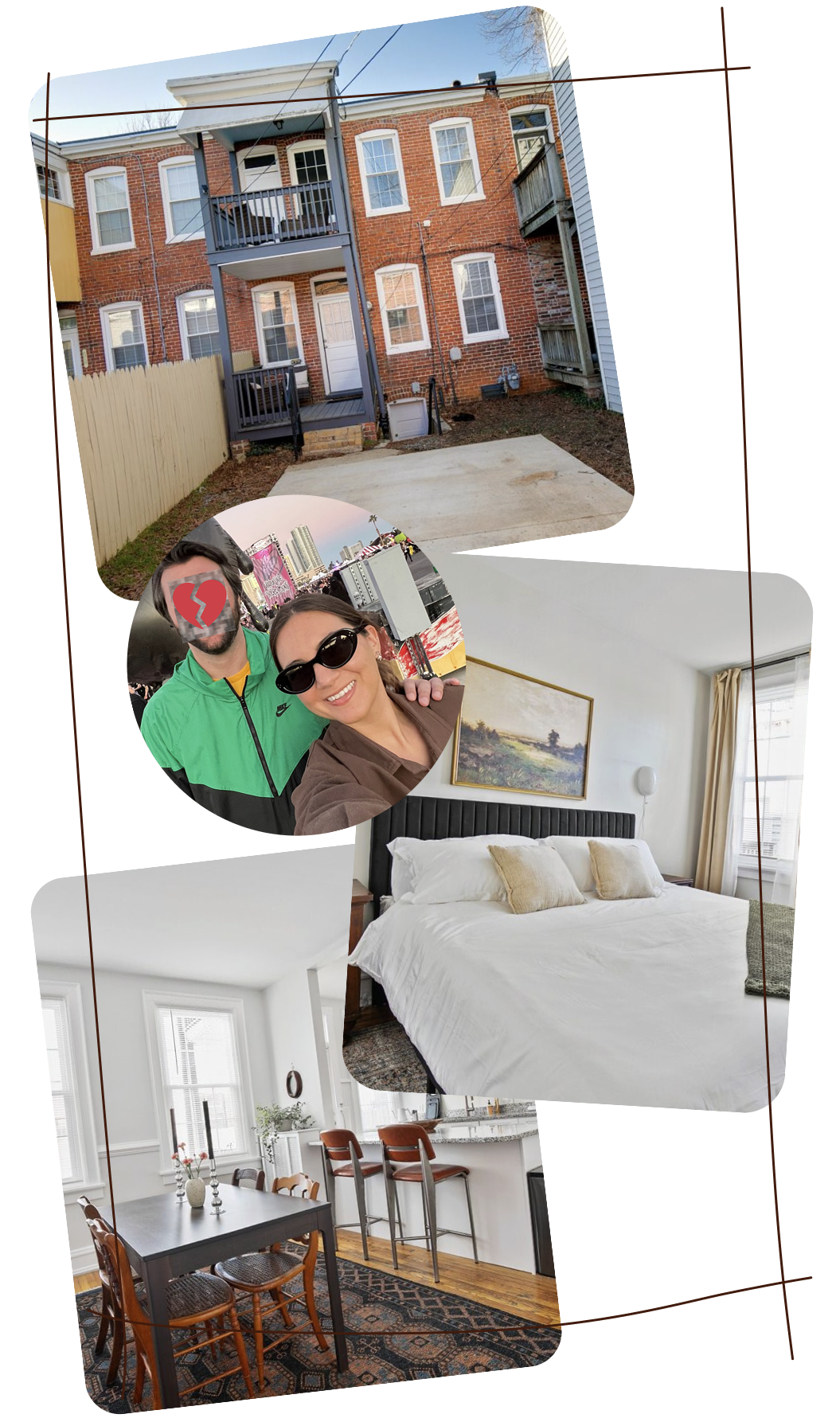
Courtney’s reason for buying wasn’t just “investment.” It was personal.
Her family is in Virginia, and Richmond had long been one of her favorite places to spend time, close friends, a neighborhood she loved, and a real sense of connection. As her younger sisters grew up, she started feeling the weight of not being physically close for the everyday moments.
So she imagined a life where she could be part time in Austin and part time in Virginia, and at the time, both she and her partner had remote jobs. Richmond felt like the bridge between the life she had and the life she wanted.
Why buying together felt like the right move
Courtney and Bob approached the purchase like a shared project, and in many ways, it brought out their best teamwork.
They were both tech forward and organized: they built systems, had weekly money meetings, and treated the home like a real collaboration with clear check ins. Courtney even described the homebuying and ownership process as some of the best collaboration they had in their relationship.
They also didn’t avoid the hard topics. They talked early about “what if we break up?” and even discussed the possibility of staying business partners if the relationship ended.
What shared ownership was like (the part that surprised her)
Even with agreements and weekly “money meetings,” Courtney said shared ownership felt lonelier than she expected with Bob, especially because they had agreed it would primarily be her project.
That’s a detail people don’t always anticipate: co-owning isn’t only about the money. It’s the mental load. Decisions. Managing tenants. Tracking numbers. Holding the full picture.
When one person is carrying more of that invisible work, it can start to feel uneven, even if the partnership is “fair” on paper.
When things changed
The relationship ended.
The house part was, thankfully, relatively calm. Courtney and Bob gave themselves space, didn’t rush into immediate decisions, and had a long-term tenant in place, which created some breathing room.
But as time went on, it became clear that they weren’t moving at the same pace. Bob was ready to sell and move on, while Courtney wanted time — time to explore options, run the numbers, and see if keeping the house was still possible.
Courtney worked hard to make that happen. She explored several buyout paths: her realtor, a neighbor, people from her real estate network, and other potential partners who showed genuine interest. The interest was there, but without a formal agreement outlining timelines or exit terms, there simply wasn’t enough runway to find the right person and move forward confidently.
With more structure in place, Courtney may have had additional time and clearer options. An operating agreement could have created defined windows for buyouts, expectations around early exits, and space to evaluate alternatives without pressure.
Instead, the decision had to be made more quickly than she would have preferred.
property alone. So they put the house on the market.
The most hopeful part of this story: what she learned
Courtney doesn’t see this experience as a failure, she sees it as a crash course in co-ownership.
She learned what she wants in a future partner, how important it is to define exit paths, and how much smoother the “what now?” moments can be when structure is in place.
When asked, she said she would absolutely co-buy again but next time, she’d want:
Would a platform like Joynt have helped?
When we asked Courtney that directly, her answer was yes, especially in two key areas:
1) Structure before things get emotional
Courtney shared that she and her partner talked about creating an LLC, but they “got lazy” and didn’t follow through. She thinks having a guided process (and prompts that make you talk through real scenarios) would have helped them formalize the protections earlier, not because there wasn’t trust, but because clarity makes everything easier when life changes.
2) Seeing options clearly when you’re deciding what to do next
One of Courtney’s biggest reflections was that she wished she’d had a trusted, neutral expert (or tool) to help her understand the “keep it” option. She didn’t feel confident solo managing the property long term, and she believes clearer support around the numbers, risks, and scenarios could have changed how she decided.
And perhaps the most relatable insight: she didn’t want the process to feel like two people debating spreadsheets and assumptions. She wanted something dependable in the middle, a system that holds the details so the humans can focus on making the decision.

Her advice is simple and empowering:
If your gut says no, it’s okay to back out, even mid-process. Losing a few thousand dollars is better than losing time, energy, and peace in the wrong partnership.
And if it feels like a yes?
Get organized. Have the hard conversations. Put structure in place early, so ownership feels clear, and life changes don’t have to become chaos.

Stories, ideas, and practical guidance for buying property together.
It’s for people who are curious, asking questions, and figuring things out, whether you’re ready to buy now or just starting to explore what shared ownership could look like.
PS: Online community coming soon...we’ll keep everyone posted!
Joynt helps you co-own a home with people you trust. Actually own a share of the property through a protected LLC structure, making ownership flexible, secure, and easy to manage.
New to co-ownership or already share a home? Joynt helps you set up an LLC, manage finances, and stay in sync with your group—all in one easy platform.
See moreCurious about co-ownership? Joynt makes it easy to buy and share a home with others—offering legal protection, flexible access, and simple tools to manage it all together.
See moreOnboarding a property to Joynt is simple—just start a group, share some ownership details, and we’ll handle the LLC setup, agreements, and tools to manage your shared home smoothly.
See moreJoynt’s tools make co-ownership easy—manage bookings, track finances, handle decisions, and stay connected with your group, all in one place.

At Joynt, we believe in making property co-ownership simple, accessible, and enjoyable. The Joynt platform empowers people to own, manage, and share property with others. By handling the legal, financial, and scheduling complexities, we enable co-owners to focus on what truly matters → enjoying their home.
Whether you're looking to co-own with friends, family, or like-minded buyers, Joynt makes the journey effortless and rewarding.
Share Together
Joynt for Professionals
Expand possibility. Spark connection. Unlock ownership. Joynt helps deliver more for professional services clients — and transform one opportunity into many.© Joynt. All rights reserved. Terms of Use Privacy Policy